
The future of cancer follow-up

Among countless fragments. Find the tumour signal.

VitaGuard offers a more continuous molecular view after treatment—looking for a rare tumour signal in blood, then following how it changes over time.

Commercial operating experience · International laboratory development

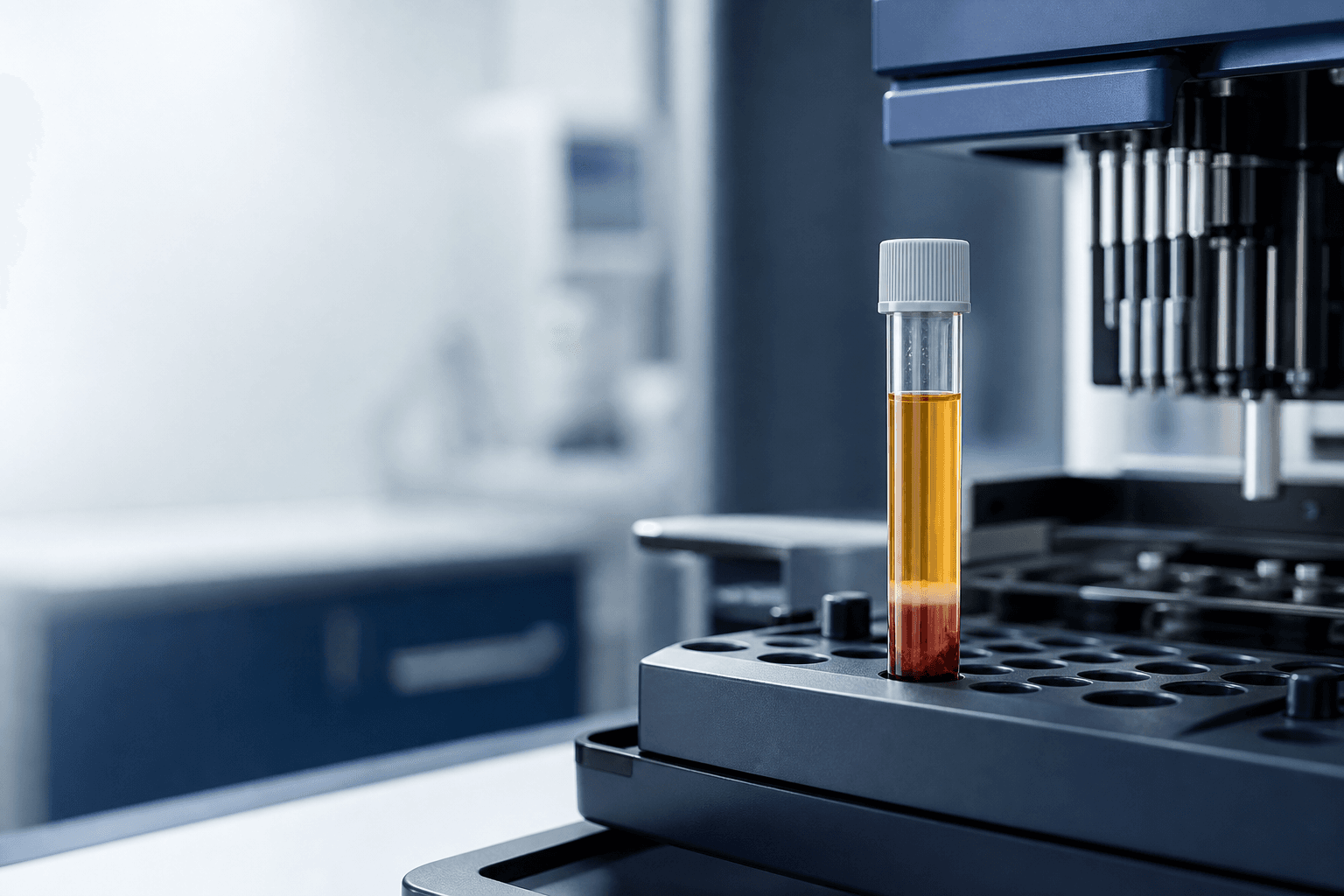
Illustrative blood-plasma sample prepared for molecular analysis

Cancer care sees moments
VitaGuard follows what happens between them

Today's tools remain essential. VitaGuard could add molecular context between scans—showing whether a signal appears, clears, persists, rises or falls across repeat blood draws.

Why continuity matters

MRD can turn isolated results
into a molecular timeline

After treatment, repeat blood tests can look for tumour-derived DNA—ctDNA—and follow whether the signal appears, clears, persists, rises or falls.

01Treatment complete
02Blood sample
03Look for ctDNA
04Repeat testing
05Read the trend
06Review with standard care

Molecular change must be interpreted with imaging and clinical context.

Begin with blood
without waiting for tumour tissue

VitaGuard connects sample handling, targeted sequencing and interpretation in a functioning laboratory-developed workflow. Its fixed-panel approach is designed to make repeat testing practical.

Tissue-informed MRD

Tumour tissue sequence tumour develop a patient-specific assay monitor blood

VitaGuard tumour-naive MRD

Blood sample apply a fixed panel classify and follow the signal

Why that difference matters VitaGuard can begin without a tumour-tissue first step. This supports a consistent workflow and may make testing more practical when tissue is unavailable, insufficient or difficult to access. Each MRD approach has different strengths, and performance must be established for each intended use.

How VitaGuard works
Illustrative molecular laboratory workflow

One test can reveal a signal
Repeated tests can show how it changes

A longitudinal view could help distinguish a single result from a persistent trend—and indicate when a change may deserve closer clinical investigation. Its meaning will depend on cancer type, treatment history and validated intended use.

After treatmentWhat may remain?
Early follow-upIs the signal clearing?
SurveillanceIs something changing?
Clinical contextDoes the change merit a closer look?

Published evidence provides a foundation
for international clinical development

A 2024 observational colorectal study associated with the Tongshu platform linked longitudinal MRD findings with recurrence. In a defined subset, the molecular signal preceded CT-confirmed recurrence by a reported median of 198.5 days—an opportunity to investigate, not proof of improved outcomes.

104Patients

Included in one published postoperative colorectal cancer study.

94.4%Longitudinal NPV

Reported recurrence outcome under the study’s longitudinal analysis.

9.385Hazard ratio

Reported association between longitudinal MRD status and recurrence in that cohort.

These figures come from one published observational study associated with Tongshu. The paper does not name VitaGuard or establish the performance, clinical utility or regulatory status of Fidelion's international implementation. Earlier molecular detection has not, by itself, demonstrated improved patient outcomes.

See the research and its limits

A functioning technology
ready for international development

Fidelion combines established operating experience with the international rights and development programme to prepare VitaGuard for new markets.

A scanning plane searching through cell-free DNA fragments in blood
01 · The search

Look beyond isolated moments

Fidelion began with a practical question: could molecular follow-up after treatment become more continuous?

Our story
A rare gold tumour-derived DNA fragment isolated among ordinary cell-free DNA
02 · The discovery

Find a technology already in practice

The search led to VitaGuard—a functioning tumour-naive MRD workflow with commercial operating experience.

Discover VitaGuard
A tumour DNA signal connecting a network of molecular laboratories
03 · International development

Build for new markets

With international rights assigned, Fidelion is advancing validation, quality systems and access through qualified laboratory partners.

Build with us

A functioning technology
ready for international development

Fidelion combines established operating experience with the international rights and development programme to prepare VitaGuard for new markets.

A scanning plane searching through cell-free DNA fragments in blood
01 · The search

Look beyond isolated moments

Fidelion began with a practical question: could molecular follow-up after treatment become more continuous?

Our story

A functioning test reveals the signal
Repeated testing creates the timeline

Reliable repeat testing could create governed molecular timelines. With appropriate consent, data rights and validation, those histories may support clearer reporting and future research into recurrence, response and resistance.

Molecular timelinesClinical contextGoverned research
Explore the research horizon
Illustrative molecular signals tracked across repeated timepoints

A global system, built together

The story is moving
and there is more to come

Visit the newsroom

Current items link to public filings by BioNexus Gene Lab Corp and remain subject to the qualifications in those filings.

Let's make cancer follow-up continuous

Partner with Fidelion
Product status

VitaGuard originated as a commercially used laboratory-developed testing workflow. International rights outside Greater China have been assigned to Fidelion; operational implementation remains in progress. Fidelion does not offer VitaGuard as a direct-to-consumer product or for general product sale. Availability through a qualified laboratory in any new market will depend on laboratory validation, quality systems and applicable requirements. Molecular monitoring is not a substitute for professional medical advice, diagnosis, imaging or treatment. No Fidelion AI product is currently available for clinical use.